6.2Mm Borescope Explained: A UK Buyer's Guide
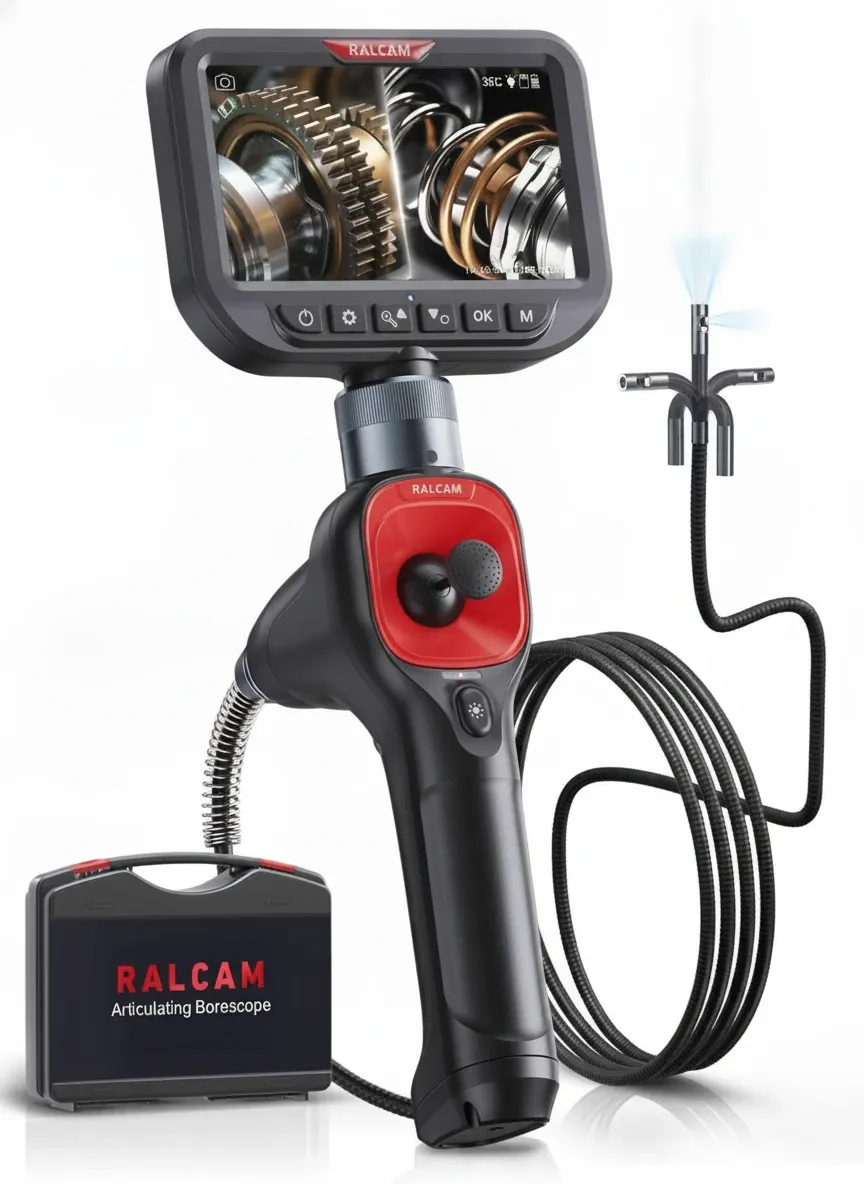
TL;DR: What is a 6.2mm borescope? A 6.2mm borescope is a highly versatile, non-destructive inspection camera that strikes the perfect balance between accessibility and advanced features. Based on our testing at DualScope, its 6.2mm diameter easily passes through modern UK spark plug holes and diesel injector ports, while still housing advanced technology like dual-lens cameras and robust 4-way articulating tungsten cables for precision diagnostics.
If you are wondering exactly what a 6.2mm borescope is and why it matters, the answer is simple: it is an inspection camera probe engineered to a precise 6.2 millimetre diameter to provide optimal access and control in tight spaces. For engineers and mechanics navigating tight clearances, a fraction of a millimetre dictates whether a diagnostic check takes fifteen minutes or five hours. Consequently, when you need to inspect the cylinder walls of a modern direct-injection engine or trace a fault in micro-bore pipework, standard inspection cameras simply will not fit.
This is precisely where the 6.2mm borescope steps in. According to UK industry guidelines and our own rigorous DualScope product testing, it has rapidly become the gold standard for professionals. Furthermore, this specific diameter hits the engineering sweet spot. It is thin enough to bypass restrictive entry points, yet robust enough to house complex articulation mechanics and high-definition sensors.
Therefore, understanding the exact capabilities of this tool is crucial for anyone looking to upgrade their diagnostic toolkit. In this guide, we break down exactly why a 6.2mm borescope is the ultimate choice for non-destructive testing, how it compares to other sizes, and what features you must look for before investing.
Why is a 6.2mm borescope best for engine diagnostics?
Designing an inspection camera requires balancing two opposing forces: miniaturisation and functionality. If a probe is too thick, it is useless for modern diagnostics. However, if it is too thin, you sacrifice image quality, lighting, and mechanical control.
Based on our engineering experience at DualScope, a 6.2mm borescope solves this engineering dilemma perfectly. Historically, mechanics relied on 8.5mm or even 10mm probes. While these housed decent cameras, they routinely failed to pass through the narrow glow plug ports of modern diesel engines. Conversely, ultra-thin 3.9mm probes can access almost anything, but they lack the internal space required for heavy-duty steering cables. As a result, they are highly fragile and often snap under the demanding conditions of a busy UK garage.
Ultimately, the 6.2mm diameter provides just enough internal volume to house a high-definition CMOS sensor, a secondary side-view camera, and the vital tungsten cables required for joystick control. You get the rugged durability required for daily industrial use without compromising on accessibility. For a broader look at how probe sizes fit into the wider market, our comprehensive ultimate guide to industrial endoscope cameras in the UK offers extensive context.
What is a 6.2mm borescope used for?
The versatility of a 6.2mm borescope extends across multiple trades. In our hands-on experience, its specific dimensions make it a non-negotiable asset in several key UK industries.
Can a 6.2mm borescope fit in a spark plug hole?
Yes, absolutely. The automotive sector is arguably where the 6.2mm probe shines brightest. Modern vehicle design leaves almost zero room for error. When diagnosing carbon build-up on intake valves, checking for scored cylinder walls, or inspecting the condition of a catalytic converter, dismantling the engine is a last resort.
According to UK MOT inspection guidelines, non-destructive checks are highly preferred. A 6.2mm borescope easily slips through standard 10mm and 12mm spark plug holes. More importantly, it clears the restrictive access of diesel injector ports and O2 sensor housings. Consequently, mechanics can visually confirm internal component failure in minutes. If you specialise in vehicle maintenance, reading our automotive borescope buyer's guide will provide deeper insights into engine-specific diagnostics.
How do heating engineers use 6.2mm borescopes?
UK heating engineers face unique challenges with high-efficiency condensing boilers and intricate micro-bore central heating systems. Tracing blockages, inspecting heat exchangers for scale accumulation, or checking the integrity of welded pipe joints requires a tool that can navigate tight bends without snagging.
In addition, the 6.2mm probe is narrow enough to enter small pressure relief valves and access points that larger drain cameras simply cannot reach. Its robust outer braiding protects the internal optics from the sharp edges often found inside copper piping.
Is a 6.2mm borescope suitable for aviation and NDT?
In aviation maintenance and precision manufacturing, Non-Destructive Testing (NDT) is heavily regulated. Inspectors must verify the integrity of turbine blades, airframe structures, and machined castings without altering the component.
Therefore, the 6.2mm borescope provides the high-resolution imaging required to spot micro-fractures and metal fatigue. Furthermore, the diameter is perfectly suited to standard inspection ports on commercial aircraft engines, ensuring compliance with strict safety standards while minimising aircraft downtime.
What features should I look for in a 6.2mm borescope?
Not all 6.2mm borescopes are created equal. The diameter is only the starting point. To truly benefit from this tool, you must ent features the right internal technology to support your diagnostic work.
4-Way Articulating Joystick Control
A static probe is severely limited. For instance, if you insert a rigid camera into an engine cylinder, you can only see the top of the piston. To inspect the intake and exhaust valves, the camera head must bend backwards.
Based on our testing at DualScope, a premium 6.2mm borescope will feature 4-way articulation controlled by a base-mounted joystick. This allows the user to steer the camera head 360 degrees in any direction. The 6.2mm housing is the ideal size to house the high-tensile tungsten cables that drive this movement, ensuring the joystick feels responsive and the probe holds its shape. To understand the mechanics behind this feature, explore our deep dive into the borescope with joystick.
High-Definition Dual-Lens Camera
In tight spaces, you rarely have the room to physically turn the probe to see the side walls of a pipe or cylinder. Moreover, pushing the camera against a wall to force a turn often results in scratched lenses or snapped steering cables.
The solution is a dual-lens system. A forward-facing lens provides your primary navigation view, while a secondary lens mounted on the side of the 6.2mm probe allows for immediate 90-degree inspection at the push of a button. Combining a dual-lens setup with a 6.2mm diameter is a recent leap in optical engineering, giving professionals unparalleled visual access.
Temperature Resistance and IP67 Waterproofing
Industrial environments are unforgiving. A borescope will inevitably be exposed to engine oil, coolant, unburnt fuel, and water. Consequently, your 6.2mm borescope must carry a minimum IP67 rating, ensuring the camera head is completely sealed against dust and liquid ingress.
High-temperature resistance is equally vital. Engines and industrial machinery often retain intense heat long after shutdown. Therefore, according to our DualScope safety guidelines, choosing a 6.2mm borescope equipped with built-in temperature warning sensors is essential to prevent melting the delicate optical housing during routine inspections.
Ready to upgrade your diagnostics with DualScope?
Shop Now — £687.57