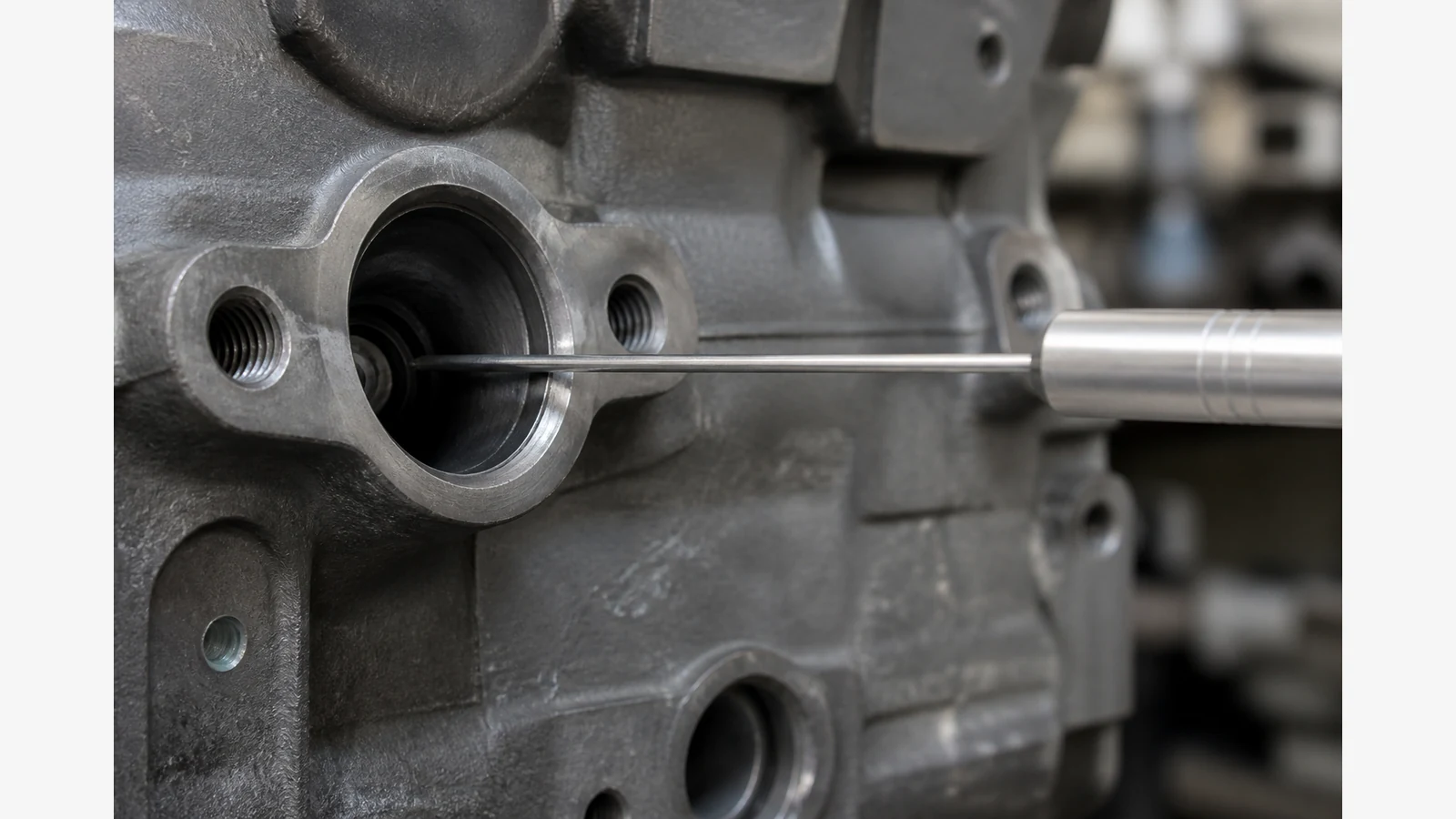
Spark Plug Hole Borescope Diameter Checklist Uk
Before you buy any automotive borescope for spark-plug access, measure the clear bore you can pass — not the thread size stamped on the plug — then choose a probe outer diameter with real clearance for the tip stack, lights and any articulation joint.
UK and trade buyer materials repeatedly put probe diameter first: smaller openings such as spark-plug and injector paths often need probes well under general-purpose 8 mm sizes, while larger tips fail even when the thread looks “roomy”.
Start with the MLC UK note that sub-6 mm tips matter for spark-plug style access.
Why 3.9–5.5 mm ranges dominate tight ports
Ultra-slim probes around 3.9 mm are commonly sold in the UK for glow-plug and tight combustion access. Mid sizes around 5.5 mm remain popular when the port allows more light and a sturdier tip. A UK retail example of the slim class is the Sealey-style 3.9 mm video borescope listing on Sparkplugs Ltd.
Where ~6 mm-class probes still fit — and where they fail
Many petrol spark-plug tunnels will accept probes near 6 mm if the tip is clean, the cable is guided carefully, and there is no bulky articulation joint jammed in the throat. They fail when the clear bore is ovalled, sleeved, or blocked by carbon, or when dual-lens/articulating tip hardware grows the effective tip diameter beyond the published shaft size.
Industrial selection tables often place automotive cylinder work in roughly the 3.9–6.2 mm band depending on the port — treat that as a planning range, not a promise for every engine. See QBH automotive probe diameter ranges.
Step checklist
- Remove the plug and measure the smallest clear diameter along the path with a gauge or calliper — not only the thread OD.
- Compare that number to the probe OD plus tip hardware, not marketing “fits spark plugs” language alone.
- Dry-fit carefully with power off and cool engine; never force a tip past a step.
- Plan lighting: shiny metal needs dimmable LEDs to avoid washout.
- If you need to see valve backs rather than only the piston crown, plan steering or dual-lens separately — see dual lens versus articulating tip and 4-way versus 2-way steering.
Honest fit limit for DualScope-class tips
DualScope’s steerable dual-lens class is built around a larger tip family than ultra-slim 3.9 mm glow-plug tools. If your primary weekly job is the tightest diesel glow-plug ports, choose a dedicated slim probe first. If your ports clear a ~6 mm-class tip and you need aiming plus dual views, a steerable dual-lens kit can be the right trade tool — after measurement, not before.