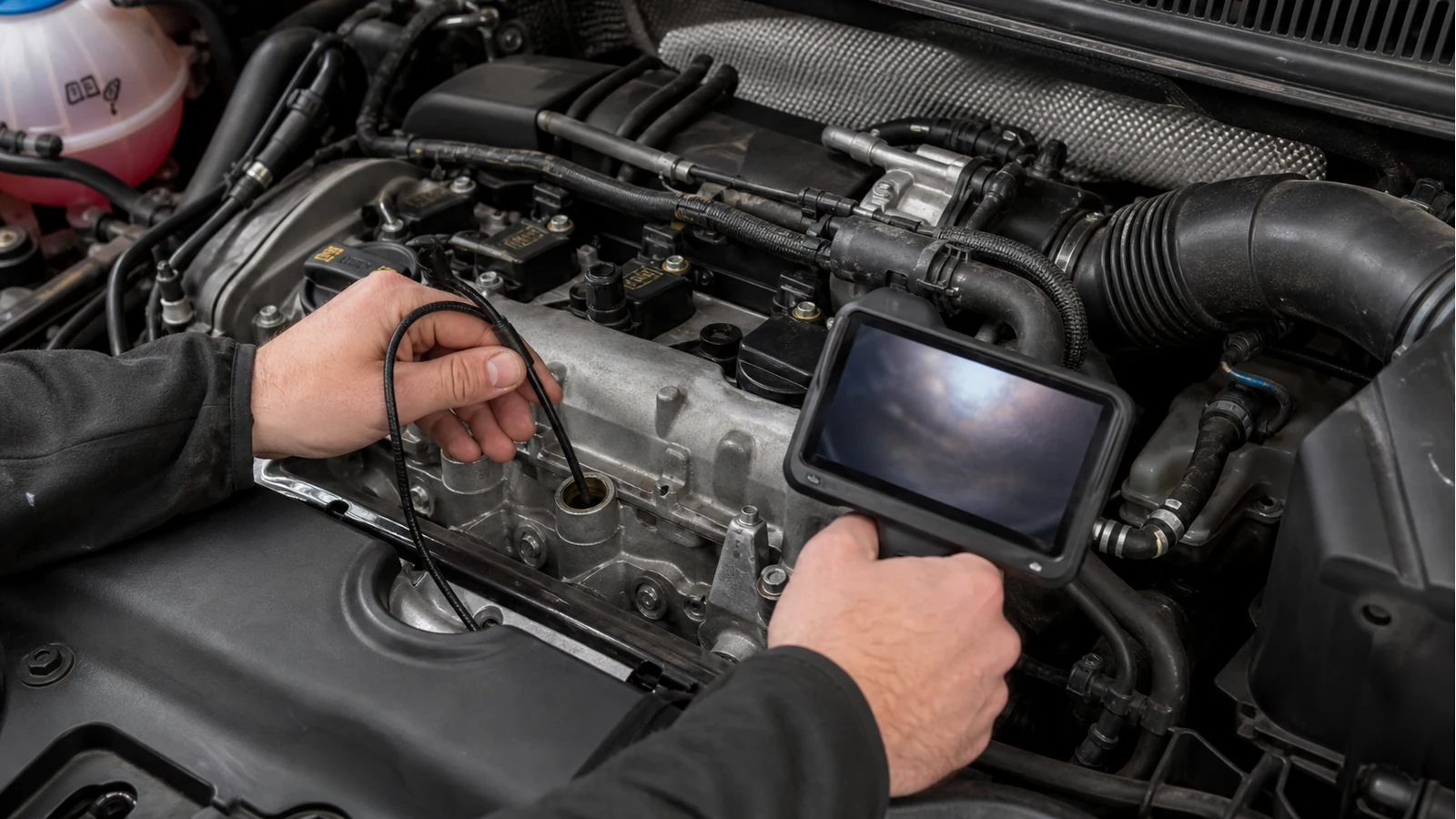
Piston Crown Carbon Inspection Camera Uk
Direct answer: a camera through a spark-plug port can show visible piston crown carbon and some nearby wall or valve context, provided the probe fits and the light is controlled. It cannot replace compression, leak-down or other mechanical tests.
Use the camera for evidence, not a verdict
UK automotive borescope products are commonly positioned around spark-plug holes, injector ports and cylinder viewing. Milwaukee's UK automotive technician borescope page describes front and side viewing for engine access and documentation; the category context is here: spark-plug and cylinder access borescope.
The practical value is customer communication. A clear still of heavy deposits or an obviously clean crown can support the next diagnostic step. It should not become a stand-alone judgement about compression, ring seal, injector performance or whether a decarb service is mandatory.
Workshop workflow
- Start cold and safe: follow the workshop procedure before removing the plug.
- Confirm access diameter: check the probe head, including any side lens or collar, against the port.
- Control glare: oily metal can wash out under full LED brightness; dim before deciding the image is unusable.
- Capture context: save the cylinder number, orientation and whether the image is crown, wall or valve-side context.
- Write the limit: note any unseen areas and any test still required.
Why steering or side view helps
A fixed forward lens sees what sits directly under the plug port. That may be enough for a crown deposit check. If you also need wall scoring, valve context or a view around the chamber, steering or a side lens reduces blind spots. QBH's buying guide makes this job-first point for automotive use: choose probe size for plug access, then decide how much steering is needed for walls, valves and crown context. Read the guide here: automotive probe size and steering guidance.
When not to proceed
Do not proceed if the access diameter is unknown, if the probe does not enter freely, or if the inspection is being used to replace required tests. Diesel glow-plug access is especially size-sensitive; the separate checklist is here: glow-plug hole borescope size checklist.
UK trade listings for articulated engine inspection cameras show that spark-plug and engine-access use cases exist in the market, but the exact fit still depends on the vehicle. See one example category listing from Sparkplugs Ltd: articulated engine inspection camera listing.
When DualScope-type products are relevant
If the plug-port access accepts the probe and the workshop needs a self-contained, steerable camera for repeated evidence capture, an articulating product is a relevant category to compare. The verified same-site next step is the DualScope Pro articulating borescope detail page. If your measured access is too small, choose a slimmer probe instead.
Bottom line
Use a piston crown carbon inspection camera to see and document what is visible through the port. Measure access first, control glare, save useful evidence, and keep the mechanical diagnosis honest.